Micro-Acoustics: The Engineering Challenge of Big Sound in Tiny Spaces
Update on Dec. 21, 2025, 6:44 a.m.
In the world of consumer electronics, miniaturization is the ultimate flex. Making a phone smaller is hard; making a high-fidelity speaker smaller than a dime is a battle against physics. When we look at devices like the Eleror X9 Mini, which shrinks a complete wireless audio system into a 2.7-gram package, we are looking at a masterclass in spatial efficiency.
But shrinking comes with consequences. Audio waves need space to propagate. Batteries need volume to store chemical energy. Antennas need length to resonate. How do engineers balance these conflicting demands inside a chassis barely larger than a coffee bean?

The Physics of Small Drivers
The heart of the X9 is a 6mm dynamic driver. In the audiophile world, 6mm is considered tiny. A standard earbud might use 10mm or 12mm drivers. * The Displacement Problem: To create bass (low frequencies), a driver must move a significant volume of air. A small diameter diaphragm must move further (higher excursion) to move the same amount of air as a larger diaphragm. This requires more power and can introduce distortion. * The Chamber Constraints: The acoustic chamber behind the driver acts as a spring for the air. In a micro-earbud, this volume is almost non-existent. This raises the resonant frequency of the system, naturally rolling off deep bass.
However, for sleep and relaxation—the primary use case of the X9—this “flaw” can be a feature. Extreme sub-bass can be fatiguing. A mid-forward sound signature, characteristic of smaller drivers, is excellent for vocals (podcasts, guided meditations) and white noise masking, offering clarity without the “thump” that might startle a sleeper.
The Tetris of Internal Layout
Inside that tiny shell, engineers must pack:
1. The Battery: A lithium-ion coin cell. It takes up the most space.
2. The PCB: The motherboard containing the Bluetooth SoC (System on Chip), amplifier, and power management circuits.
3. The Antenna: For Bluetooth 5.0 to work reliably, the antenna must not be blocked by the other components or the user’s hand/pillow.
4. The Magnet: To hold the bud in the case.
This density creates thermal challenges (heat has nowhere to go) and signal integrity challenges (components interfere with each other). The fact that it works at all is a testament to modern System-in-Package (SiP) integration technologies.
Protecting the Micro-Environment: IPX5
Sleep is surprisingly wet. We sweat. We drool. Oils from skin and hair coat everything. For an electronic device lodged in the ear canal, this is a hostile environment.
The IPX5 waterproof rating of the X9 indicates protection against low-pressure water jets. * Mesh Barriers: The nozzle must be covered by a mesh fine enough to block liquid but open enough to pass sound. * Sealed Seams: The plastic housing is likely ultrasonically welded or glued with industrial adhesives to prevent moisture ingress. * Nano-Coating: Internal components often receive a hydrophobic coating to prevent short circuits if humidity does penetrate.
This ruggedness ensures that the device survives the nightly “micro-climate” of the ear canal, maintaining performance over months of use.
Conclusion: The Compromise of Convenience
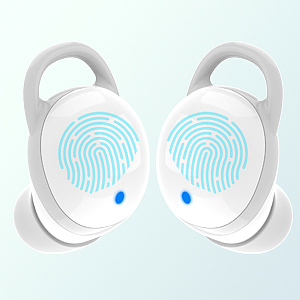
Ultra-small earbuds are defined by their compromises. You trade battery life for size. You trade earth-shattering bass for comfort. You trade physical buttons for sleek touch surfaces.
The Eleror X9 Mini accepts these trades willingly to achieve a specific goal: invisibility. It is not trying to be a studio monitor; it is trying to be a phantom. By pushing the limits of micro-acoustics and packaging, it offers a glimpse into a future where technology dissolves into the background, supporting our lives (and our sleep) without demanding to be seen.