The End of Battery Anxiety: Energy Efficiency and Connection in the Wireless Age
Update on Dec. 21, 2025, 6:30 a.m.
For the first decade of the wireless revolution, “battery anxiety” was a constant companion. Early Bluetooth earphones required daily charging, turning them into yet another device to manage. But as we move deeper into the 2020s, a quiet revolution in energy density and power management is changing the equation.
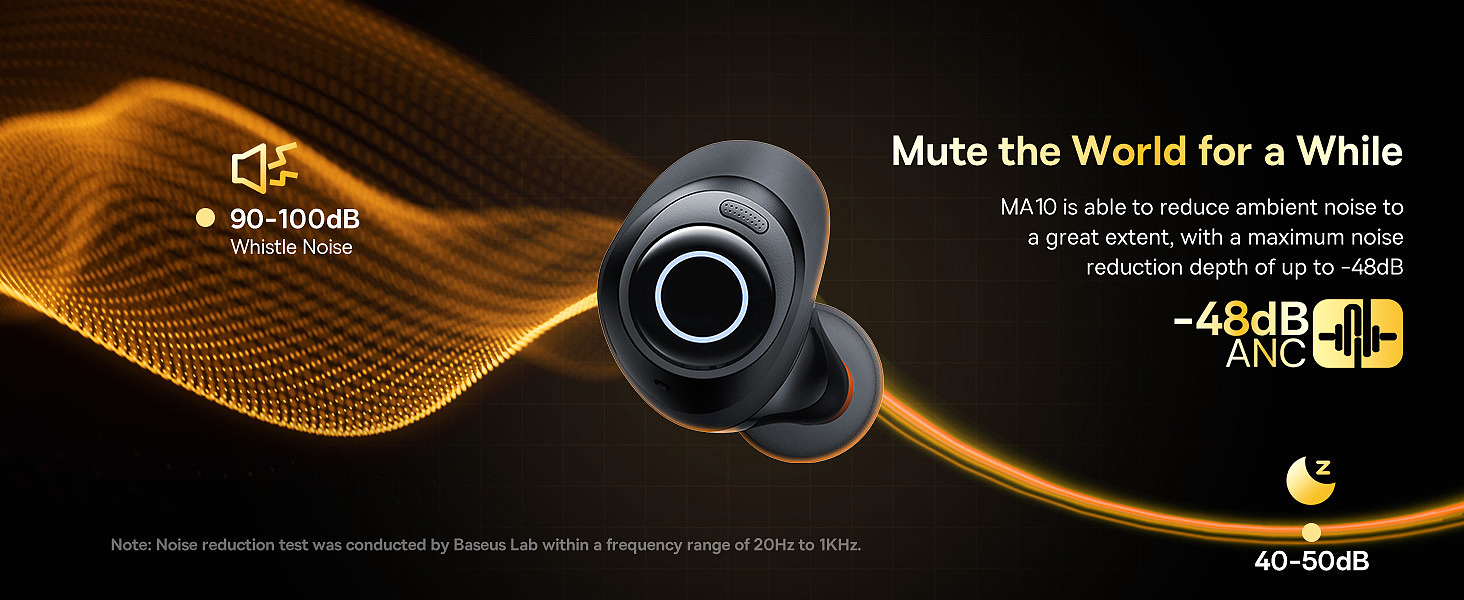
We are reaching a tipping point where battery life is no longer measured in hours, but in weeks. Devices like the Baseus Bowie MA10, with their staggering 140 hours of total playback, are proof of this shift. This endurance is not just about a bigger battery; it is the result of a symbiotic relationship between advanced silicon and efficient communication protocols.
The Pillars of Endurance: Chipsets and Chemistry
How do you squeeze 140 hours of energy into a pocket-sized package? It requires optimizing both the “tank” (battery) and the “engine” (chipset).
Bluetooth 5.3: The Efficient Messenger
The leap to Bluetooth 5.3 is critical. Unlike older versions, 5.3 is designed with Low Energy (LE) at its core. It reduces the “duty cycle”—the amount of time the radio needs to be awake to transmit data. By optimizing the handshake process between the phone and the earbuds, and by managing interference more intelligently, the chipset consumes significantly less power for the same amount of data transfer. This efficiency gain is what allows modern earbuds to run for 8+ hours on a single charge, while the case acts as a deep reservoir for weeks of use.
Fast Charging: The Convenience Multiplier
Even with massive capacity, charging speed matters. The ability to grab 2 hours of play from just 10 minutes of charging (a common feature in modern chipsets) fundamentally changes user behavior. It means you never have to plan ahead; a brief top-up before a run is all that is needed.
The Science of Clarity: ENC and Beamforming
While ANC silences the world for you, ENC (Environmental Noise Cancellation) silences the world for the person you are talking to.
In a crowded cafe or a windy street, how does a microphone distinguish your voice from the chaos? The answer is Beamforming.
The Baseus Bowie MA10 utilizes a 4-microphone array.
1. Time of Arrival: Sound waves reach each of the four microphones at slightly different times.
2. Spatial Filtering: The DSP calculates the origin of the sound based on these time delays.
3. The Beam: The system creates a virtual “beam” of sensitivity focused specifically on your mouth. Any sound originating from outside this beam (like a car passing by or a barista shouting) is mathematically attenuated.
This technology transforms a consumer earbud into a professional communication tool, allowing for clear calls in environments that would have been impossible just a few years ago.
Durability as a Standard: IPX6
Finally, endurance applies to the physical hardware as well as the battery. The IPX6 rating represents a significant level of protection. Unlike IPX4 (splash proof), IPX6 means the device can withstand powerful water jets. This requires precision sealing and often the use of hydrophobic nano-coatings on internal components.
This durability ensures that the device can survive the real world—sweat, rain, and accidental spills—matching its long battery life with a long physical lifespan.
Conclusion: The Invisible Utility
The ultimate goal of wearable technology is invisibility. We want the benefits (music, communication) without the burdens (charging, pairing issues, water damage).
With ultra-long battery life and robust connection protocols, devices like the Baseus Bowie MA10 are approaching this ideal. They are becoming “install and forget” utilities, always ready, always connected, and always clear. This is the maturity of the wireless age.