The Anatomy of Precision: T-Blades, Zero-Gapping, and the Geometry of Grooming
Update on Dec. 21, 2025, 5:34 p.m.
In the realm of men’s grooming, the difference between a messy stubble and a sharp, defined look often comes down to millimeters. It is a game of precision, played on the complex topography of the human face. While the market is flooded with generic trimmers, there is a specific class of tools—exemplified by devices like the REHOYO Beard Trimmer—that adopts the architecture of professional barber equipment: the T-Blade.
Understanding the geometry of the T-blade and the mechanics of “zero-gapping” is essential for anyone looking to elevate their grooming routine from simple hair removal to facial sculpting. These are not just features; they are engineering solutions to the problems of visibility, access, and proximity.
The Geometry of Visibility: Why the “T” Shape Matters
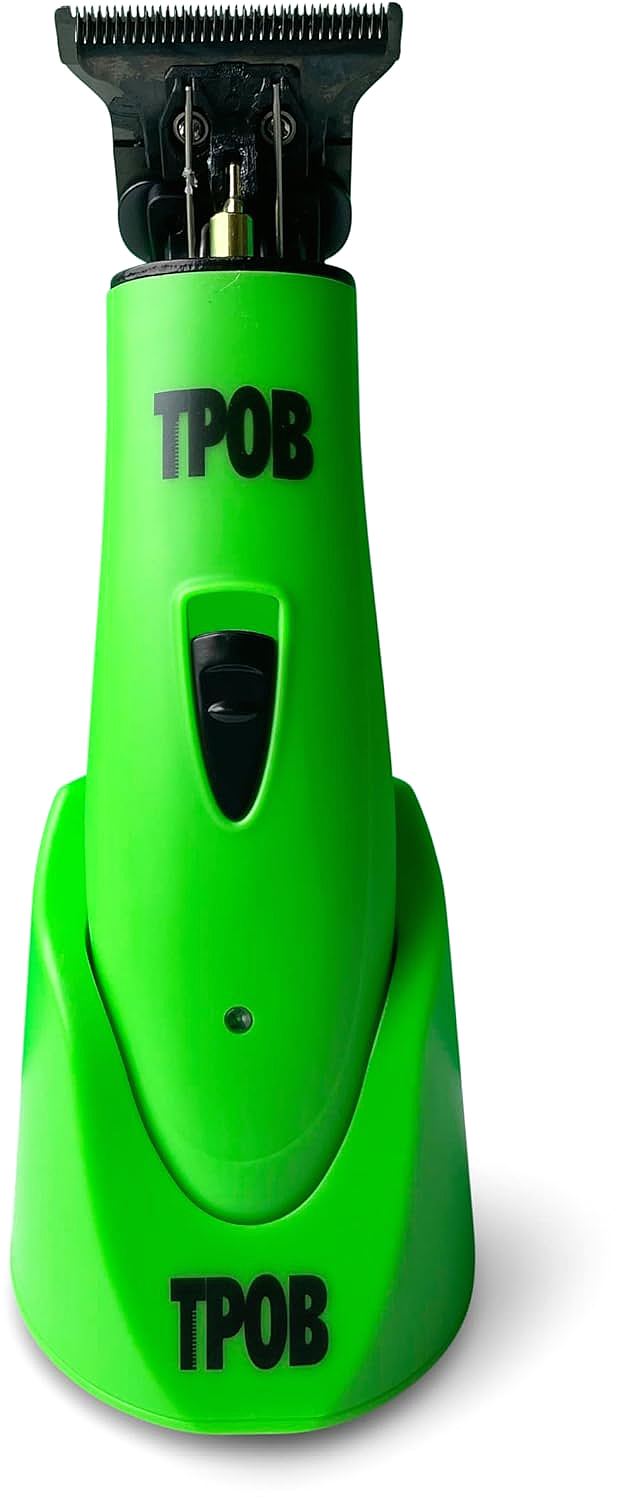
The most distinctive feature of a precision trimmer is the T-shaped blade. Unlike standard rectangular clipper heads, a T-blade extends beyond the width of the trimmer’s body drive shaft. This design is rooted in the principle of unobstructed visibility.
When edging a beard line, a mustache, or the area behind the ears, the user needs to see exactly where the cutting teeth meet the skin. Standard trimmers often suffer from “blind spots” where the bulky housing obscures the contact point. * The Overhang Advantage: The extended corners of the T-blade allow the user to visualize the cutting line from a top-down perspective without the handle getting in the way. This geometric freedom enables the creation of crisp, 90-degree angles and intricate designs. * Corner Maneuverability: The sharp corners of the “T” act like a fine-point pen. They can enter tight spaces—such as the philtrum (under the nose) or the corners of the mouth—that a wider, blockier blade simply cannot reach without over-cutting.

The Physics of “Zero-Gapping”
One of the most coveted features in modern trimmers is the ability to “zero-gap.” In engineering terms, this refers to minimizing the distance between the tip of the moving blade (the cutter) and the tip of the stationary blade (the guide).
In a standard factory setting, there is usually a small safety buffer (about 0.5mm to 1mm) where the guide blade extends past the cutter. This prevents the moving sharp edge from directly contacting the skin, reducing the risk of nicks. However, this buffer also prevents a truly skin-close trim. * The Zero-Gap Alignment: When a blade is zero-gapped, the cutter is manually or mechanically aligned to be flush with the guide. This reduces the cutting height to approximately 0.1mm or less. * The Result: This allows the trimmer to function almost like a razor, removing the “shadow” of stubble and creating ultra-sharp lines. The REHOYO Beard Trimmer highlights this capability, catering to users who demand the crispest possible finish without using a wet razor.
However, zero-gapping is a discipline of precision. If the moving blade extends even a fraction of a millimeter past the guide blade, it will cut the skin. Therefore, tools designed for this function must have rigid tolerances and stable motor mounts to prevent blade drift during operation.

Metallurgy and Friction: The Titanium Advantage
The material of the blade is just as critical as its shape. Friction is the enemy of precision. As two metal plates slide against each other thousands of times per minute, friction generates heat. Heat causes metal expansion, which can alter the precise gap alignment and cause the blade to become uncomfortable against the skin.
This is where advanced metallurgy, such as Titanium coating, plays a pivotal role. * Thermal Stability: Titanium has lower thermal conductivity compared to standard carbon steel. This means the blades stay cooler for longer periods of operation, maintaining their dimensional stability and user comfort. * Hardness and Edge Retention: Titanium is exceptionally hard. A blade coated in or made from titanium alloys creates a cutting edge that resists deformation and dulling. In a device like the REHOYO, this ensures that the 100th trim is as sharp and snag-free as the first. A dull blade pulls hair rather than slicing it, which is the primary cause of ingrown hairs and irritation.
Haptic Feedback and Stability
Finally, precision is a function of stability. A lightweight, plastic tool may feel cheap, but more importantly, it lacks rotational inertia. When a powerful motor spins, it creates vibration. Without sufficient mass in the handle to dampen this vibration, the micro-movements are transferred to the user’s hand, making steady line-work difficult.
The “weighty” feel often praised in professional-grade tools (and noted in user feedback for the REHOYO) is a functional feature. The metal housing acts as a dampener, absorbing motor vibration. This provides a stable platform, allowing the user to guide the T-blade with confidence and accuracy.

Conclusion: The Right Tool for the Art
Grooming is, in many ways, a subtractive art form. Like a sculptor chipping away stone to reveal a statue, a man trims away hair to reveal the jawline and features beneath. The T-blade trimmer is the chisel in this analogy.
By understanding the importance of blade visibility, the mechanics of zero-gapping, and the benefits of superior metallurgy, users can move beyond simply “shortening hair” to intentionally designing their look. Tools that embody these engineering principles, such as the REHOYO Beard Trimmer, empower the user to achieve professional-grade definition in the comfort of their own home.